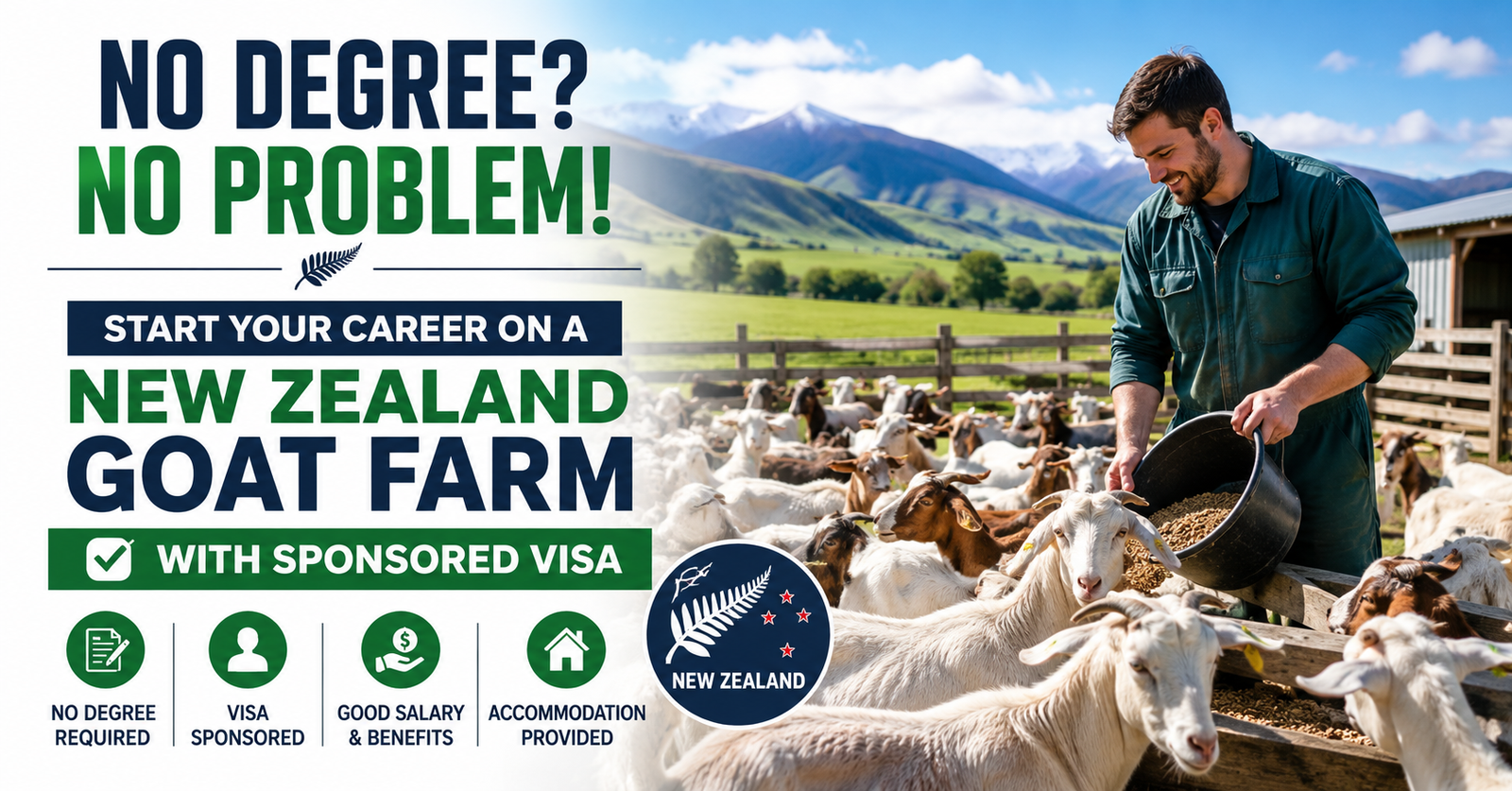
No Degree? No Problem: Start Your Career on a New Zealand Goat Farm With Sponsored Visa
Working abroad is becoming a popular option for the people who want better income, international experience, and a fresh start. For the many job seekers, finding opportunities without a university degree can feel difficult. However, andthe agriculture industry in New Zealand continues to offer practical career paths for hardworking individuals who are willing to learn and adapt. One of the most promising options in 2026 is goat farming jobs with a visa sponsorship.
Goat farming plays an very important role in New Zealand’s agricultural sector. The country is known for its strong dairy and livestock industry, and goat farms regularly require workers for the animal care, feeding, cleaning, milking, maintenance, and general farm support. Many employers value practical many skills, physical fitness, and reliability more than formal education.
This guide explains everything you need to know about starting a career on a New Zealand goat farm with a sponsored visa. You will learn about job responsibilities, or salary expectations, visa options, requirements, application steps, and practical tips to improve your chances of getting hired. Whether you are the looking for your first international job or planning a long-term farming career, this article provides useful and realistic information to help you begin.
Why Goat Farm Jobs in New Zealand Are Popular
In recent years, international workers have shown increasing interest in a New Zealand farming jobs. One major reason is the country’s demand for agricultural labor. Farms often face worker shortages, and especially in rural regions, which creates opportunities for the overseas applicants.
Goat farming jobs are very especially attractive because many positions do not require advanced qualifications or university degrees. All Employers typically focus on work ethic, willingness to learn, and the ability to handle physical tasks. This makes the industry accessible to people from very different educational and professional backgrounds.
Another reason these jobs are gaining attention is the possibility of visa sponsorship. Some New Zealand employers assist qualified all international workers with work visa processes when local labor is unavailable. While sponsorship is never guaranteed, or skilled and reliable applicants can improve their chances significantly.
In addition, many goat farms provide benefits such as accommodation support, training, and overtime opportunities, and stable working hours. Workers also get the chance to experience New Zealand’s natural beauty, peaceful rural lifestyle, and multicultural working environment.
For people looking to build international work experience without a college degree, goat farming can become a practical and the rewarding option.
Overview of the Goat Farming Industry in New Zealand 2026
New Zealand has a very strong global reputation in livestock farming. While dairy cows and sheep are major parts of the agricultural economy, and goat farming also contributes to milk production, specialty dairy products, and meat exports.
The country’s clean environment and modern farming practices help support very high-quality agricultural products. Goat farms range from small family-run operations to large commercial farms with hundreds or even thousands of animals.
Workers on a goat farms may assist with:
- Feeding and a watering goats
- Cleaning sheds and all farm areas
- Assisting during milking operations
- Monitoring all animal health
- Maintaining fences and equipment
- Transporting feed and the supplies
- Supporting breeding and newborn care
Many farms operate year-round, and which means workers may find long-term employment opportunities rather than only seasonal work.
As demand for agricultural workers continues, and employers are increasingly open to hiring international candidates who demonstrate commitment and a responsibility.
Key Highlights of New Zealand Goat Farm Jobs
| Feature | Details |
|---|---|
| Industry | Agriculture & Livestock |
| Job Type | Full-time & Seasonal |
| Degree Requirement | Usually the not required |
| Experience Needed | Basic experience helpful but not always mandatory |
| Visa Sponsorship | Available for a selected positions |
| Average Salary | NZD 22 to 30 per hour |
| Accommodation | Often partially or a fully provided |
| Working Hours | 40 to 60 hours weekly depending on season |
| Main Duties | Animal care, feeding, and cleaning, farm support |
Types of Goat Farm Jobs Available
Different farms offer very different types of roles depending on their size and production focus. Understanding these positions can help applicants choose the good and right opportunity.
Goat Farm Worker
This is the most common entry-level position. Workers handle general farm tasks including feeding animals, or cleaning sheds, and assisting supervisors with daily operations.
Milking Assistant
Goat dairy farms require workers who can assist during milking sessions. Responsibilities include operating milking equipment, or maintaining hygiene standards, and monitoring milk quality.
Animal Care Assistant
These workers focus more on goat health, or feeding schedules, vaccinations, and observing animal behavior.
Farm Maintenance Worker
Large farms also need people who can repair fences, maintain all machinery, and support infrastructure maintenance.
Farm Supervisor
Experienced workers may eventually move into leadership roles where they manage teams, monitor operations, and a coordinate farm schedules.
Salary Expectations and Benefits 2026
One of the biggest reasons all international workers consider New Zealand farming jobs is the earning potential combined with lower entry barriers.
Most beginner goat farm workers earn between NZD 22 and NZD 30 per hour depending on experience, location, and job all responsibilities. Workers with livestock handling experience or all machinery skills may earn higher wages.
Monthly earnings can vary based on working hours and overtime availability. During busy farming seasons, and workers may receive additional hours, and increasing overall income.
Common Benefits Offered by Employers 2026
Some farms may provide:
- Shared or a private accommodation
- Meals or food allowances
- Transportation assistance
- many Safety equipment
- Paid training
- Holiday pay according to the New Zealand labor laws
It is very important to carefully review employment contracts before accepting any job offer. Genuine employers clearly explain wages, working hours, or accommodation conditions, and visa support details.
Visa Sponsorship Opportunities for Farm Workers
Many people search specifically for “New Zealand visa sponsorship jobs,” but it is most important to understand how sponsorship works realistically.
Employers cannot automatically sponsor every applicant. In most cases, and sponsorship depends on:
- Labor shortages
- Employer accreditation
- Worker suitability
- Immigration requirements
- Work experience and a communication ability
Agricultural jobs sometimes fall under sectors experiencing worker shortages, and which may improve opportunities for international candidates.
Applicants should always use official immigration information and trusted job platforms when searching for opportunities.
Common Work Visa Pathways
Workers may apply through:
- Accredited the Employer Work Visa programs
- Seasonal agricultural work schemes
- Temporary farm worker all programs
Visa policies can change over time, so applicants should always verify requirements through a official immigration resources before making decisions.
Requirements for Goat Farm Jobs in New Zealand 2026
Most goat farming positions have simpler entry requirements compared to office-based all international jobs. However, employers still expect workers to meet certain standards.
Basic Requirements
- Good physical fitness
- Ability to work outdoors in very different weather conditions
- Basic English communication many skills
- Willingness to handle livestock
- Teamwork and a reliability
Experience Requirements
Some farms accept the beginners, while others prefer workers with experience in:
- Livestock farming
- Dairy operations
- Animal good care
- Agricultural machinery
Additional Helpful Qualifications
Although degrees are not usually required, these can improve your all application:
- Driving license
- Farm safety training
- Animal handling experience
- Mechanical repair some skills
Employers often prioritize applicants who show practical ability and a strong work attitude.
Step-by-Step Guide to Apply for Goat Farm Jobs 2026
Finding a genuine farming opportunity requires patience and careful research. Following a structured process can help avoid scams and improve your chances of success.
Step 1: Prepare a Professional CV
Your resume should include:
- Personal information
- Work experience
- Physical skills
- Farming or labor experience
- Language abilities
- References if available
Keep the CV simple, clear, and focused on practical experience.
Step 2: Search on Trusted Job Platforms
Use reliable agricultural and international job websites. Focus on employers who clearly mention visa support or overseas hiring opportunities.
Step 3: Apply to Multiple Jobs
Do not rely on a single application. Apply consistently to several suitable positions.
Step 4: Attend Online Interviews
Employers may ask questions about:
- Previous farm experience
- Physical fitness
- Availability
- Language ability
- Willingness to relocate
Step 5: Review Job Offer Carefully
Before accepting:
- Confirm salary details
- Check accommodation conditions
- Verify visa process information
- Read employment terms carefully
Step 6: Begin Visa Process
Once hired, your employer may provide supporting documents needed for work visa applications.
Daily Life on a New Zealand Goat Farm
Life on a goat farm can be physically demanding but rewarding for people who enjoy active work and outdoor environments.
Most workers begin early in the morning. Daily routines may include feeding goats, cleaning equipment, checking water supplies, assisting with milking, and maintaining farm hygiene.
Farm work often requires teamwork because operations must continue smoothly regardless of weather conditions. During busy periods such as breeding or birthing seasons, workers may need longer shifts.
However, many people appreciate the peaceful rural lifestyle and the opportunity to work close to nature. New Zealand’s farming communities are generally known for being welcoming and organized.
Workers who adapt well to routines, physical activity, and rural living often perform successfully in this environment.
Skills That Improve Your Hiring Chances
Although many goat farm jobs are beginner-friendly, certain skills can make your application stronger.
Animal Handling Skills
Experience working with livestock shows employers that you understand farm safety and animal care.
Communication Skills
Basic English communication helps workers understand instructions and cooperate with teams.
Mechanical Knowledge
Knowing how to use or repair simple farm equipment can increase your value to employers.
Physical Endurance
Farm work requires standing, lifting, walking, and outdoor labor for extended periods.
Positive Work Attitude
Reliability, punctuality, and willingness to learn are often more important than formal education.
Challenges You Should Know Before Applying
While farming jobs offer many opportunities, applicants should also understand the challenges honestly.
Physical Demands
The work can involve lifting, bending, walking long distances, and working in cold or wet weather.
Rural Isolation
Many farms are located far from major cities, so workers should be comfortable with quieter environments.
Seasonal Work Pressure
Certain periods of the year may require longer hours due to farm demands.
Cultural Adjustment
International workers may need time to adapt to local communication styles and workplace expectations.
Understanding these realities helps applicants make informed career decisions rather than expecting unrealistic outcomes.
Tips for Finding Genuine Goat Farm Jobs
Unfortunately, international job scams exist online. Protecting yourself is extremely important.
Use Trusted Sources
Search on established employment websites and official immigration resources.
Avoid Paying Large Upfront Fees
Legitimate employers generally do not demand huge advance payments for jobs.
Verify Company Information
Check employer websites, reviews, and contact information carefully.
Read Contracts Thoroughly
Never sign agreements you do not fully understand.
Be Careful With Unrealistic Promises
Avoid advertisements claiming guaranteed visas, extremely high salaries, or instant approvals.
Trustworthy opportunities are transparent and professional.
Best Regions in New Zealand for Farm Work
Several regions in New Zealand are known for agricultural activity and livestock farming.
Waikato
One of the country’s major dairy and livestock farming regions with many agricultural opportunities.
Canterbury
Known for large farms and strong agricultural production.
Southland
Offers livestock farming jobs in a quieter rural environment.
Hawke’s Bay
Agriculture and seasonal work opportunities are common here.
Different regions may offer varying climates, farm sizes, and living conditions, so applicants should research carefully before relocating.
Career Growth Opportunities in Farming
Many people begin as entry-level farm workers and later progress into more advanced roles.
With experience, workers may move into:
- Herd management
- Dairy operations
- Farm supervision
- Agricultural machinery handling
- Livestock health support
Some workers also pursue agricultural certifications or specialized training after gaining experience in the industry.
Long-term farming careers can provide stable income, international experience, and valuable practical skills.
Common Mistakes to Avoid
Many applicants reduce their chances by making avoidable errors during the job search process.
Sending Generic Applications
Tailor your CV for farm work rather than using unrelated resumes.
Ignoring English Communication
Even basic communication skills matter significantly in workplace safety.
Applying Without Research
Understand job responsibilities before accepting offers.
Falling for Online Scams
Always verify employers and avoid suspicious payment requests.
Underestimating Physical Work
Farm jobs require stamina and adaptability.
Avoiding these mistakes can improve your overall experience and help you find more reliable opportunities.
Frequently Asked Questions
Do I need a university degree for goat farm jobs in New Zealand?
No. Many goat farm jobs focus more on practical ability, physical fitness, and reliability rather than formal education.
Can beginners apply for farm jobs?
Yes. Some employers accept workers without previous farming experience, especially for entry-level roles.
Is visa sponsorship guaranteed?
No. Sponsorship depends on employer requirements, immigration rules, and applicant suitability.
How much can goat farm workers earn?
Pay rates commonly range between NZD 22 and NZD 30 per hour depending on experience and responsibilities.
Are accommodation benefits available?
Some employers provide accommodation support, but conditions vary between farms.
Conclusion
Starting a career on a goat farm in New Zealand can be a realistic option for people who do not have university degrees but are willing to work hard and learn practical skills. The country’s agricultural sector continues to need reliable workers, and some employers offer visa support for suitable international candidates.
These jobs provide more than just income. Workers gain international experience, practical agricultural knowledge, and the opportunity to live in one of the world’s most beautiful rural environments. However, success requires preparation, patience, and realistic expectations.
Applicants should focus on building strong resumes, improving communication skills, researching employers carefully, and understanding visa requirements honestly. Avoiding scams and relying on trusted sources is also extremely important.
For motivated individuals looking for a fresh start abroad, goat farming in New Zealand may become the beginning of a rewarding long-term career path.