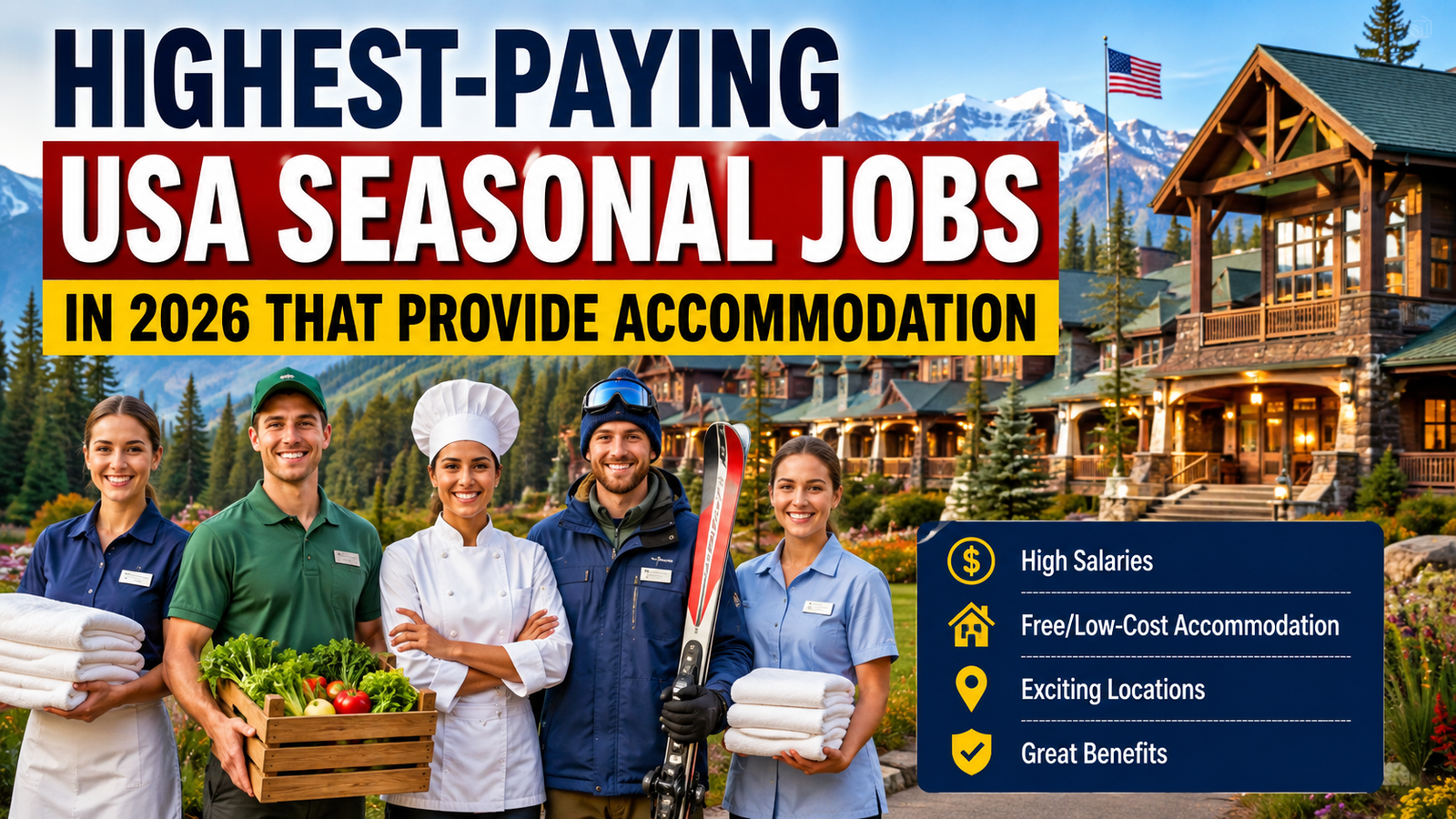
Ski resorts are among the most recognizable sources of the seasonal employment in the United States. Winter destinations in a states such as Colorado, Utah, Montana, Wyoming, Vermont, and other mountain regions can experience significant high demand for temporary employees during the ski season.
Positions may include lift operations, guest many services, equipment rental, ski instructors, maintenance, food service, or housekeeping, transportation, and administrative work. Experienced or specialized employees can have greater earning potential than the entry-level workers.
One of the major attractions is employee housing. Because many mountain resorts are the located in areas where rental accommodation can be expensive or scarce, and some employers offer dormitory-style or a shared employee housing. However, applicants should confirm whether the housing is included in the compensation or charged separately.
Workers should also consider transportation. A seasonal job may look attractive on paper, but a remote resort without convenient transport can create additional costs. Jobs with affordable employee accommodation and shuttle services may therefore be particularly valuable.
2. Seasonal Hotel and a Resort Management
Hotels, lodges, and resorts often recruit the additional staff during peak tourism periods. While entry-level roles may have moderate wages, supervisory and a management positions can offer considerably very higher compensation for applicants with relevant full experience.
Potential positions include the front-office supervisors, guest-services managers, or food-and-beverage supervisors, maintenance a supervisors, housekeeping good managers, and the operations coordinators.
Accommodation is particularly relevant for a workers recruited to remote resorts, and island destinations, national-park gateways, and a other tourism-focused locations. Some employers may provide employee housing because finding independent accommodation for a very short-term worker can be the difficult.
Applicants should very carefully examine whether the advertised wage is hourly or salaried and whether the position is classified as exempt or non-exempt under applicable labor all rules. They should also a clarify expected working hours, overtime all arrangements, or meals, housing deductions, and the exact employment the period.
For experienced hospitality very professionals, seasonal resort management can be one of the more attractive categories becausegood accommodation can reduce living expenses while the position provides professional good experience.
3. Camp and Outdoor Recreation Jobs
Summer camps and outdoor recreation businesses employ very large numbers of seasonal workers. Roles can include counselors, activity instructors, or lifeguards, kitchen workers, maintenance staff, program coordinators, and a specialized instructors.
Many residential camps provide staff accommodation because employees live at the camp during their contracts. Meals may also be included or available at reduced cost, depending on the employer.
The earning potential varies the considerably. Specialized skills—such as lifeguarding, waterfront management, or outdoor education, coaching, culinary work, or supervisory experience—may improve good opportunities.
Applicants should not focus solely on the wage. A residential camp position that includes lodging and meals can substantially reduce daily expenses. On the other hand, workers should understand that some camp positions involve very long or irregular working days and a significant responsibility.
International applicants should also the investigate whether the employer accepts their specific work authorization or participates in an appropriate temporary-work program. Eligibility differs by program and a position.
4. Commercial Fishing and Seafood Processing
Commercial fishing and the seafood-processing operations can offer seasonal employment in coastal regions, or particularly where production follows specific fishing seasons.
Some positions can involve physically high demanding work, long shifts, variable schedules, and remote living conditions. Certain employers may provide good accommodation or onboard lodging, particularly when workers are required to the remain near the operation.
Earnings can vary substantially based on the occupation, employer, production arrangements, overtime, and a location. Workers should read the employment agreement very carefully instead of relying on generalized salary figures found on the social media.
Because seafood and fishing operations may involve demanding environments, applicants should ask about safety training, protective equipment, transportation, work schedules, and accommodation before accepting an offer.
This category can potentially provide very strong short-term earnings, but it is not suitable for everyone. Applicants should evaluate the physical many requirements and living conditions as carefully as the advertised pay.
5. Seasonal Farm and the Agricultural Jobs
Agriculture is another major source of the seasonal employment. Harvest periods create temporary demand for workers across fruits, vegetables, or nurseries, orchards, vineyards, and other agricultural good operations.
Some agricultural employers provide worker housing when a required by the applicable employment arrangement or local regulations. Housing conditions can vary significantly, and so applicants should ask for full details rather than assuming that accommodation is the free or private.
Jobs may be paid hourly, by piece rate, or under the another lawful compensation structure depending on the position and a applicable rules. Workers should understand how their compensation is calculated before the beginning work.
International workers should pay particular attention to a legal work authorization. Certain U.S. agricultural employers may use temporary-worker programs such as the H-2A program, and but not every farm job is an H-2A position and the not every employer sponsors foreign workers.
Applicants should verify the actual employer and job order through the appropriate official sources before paying anyone for a recruitment or travel all arrangements.
6. National Park and good Tourism Jobs
National parks and surrounding tourism destinations generate seasonal employment in the lodging, food service, retail, or transportation, maintenance, visitor services, and a recreation.
Remote tourism locations often the face housing shortages, making employee good accommodation an most important part of seasonal recruitment. Lodges and concession operators may provide or arrange housing for a seasonal staff.
Positions vary from entry-level hospitality roles to the skilled maintenance and supervisory jobs. Employees may enjoy the opportunity to a work in popular destinations while gaining hospitality, customer- some service, environmental, or operations good experience.
However, remote employment comes with the practical considerations. Grocery stores, medical facilities, or banks, and transportation may be far away. Internet connectivity can also the vary.
Before accepting such a position, ask where the housing is a located, how workers reach the workplace, or whether meals are available, and what transportation options exist on the days off.
7. Restaurant and a Food-Service Jobs
Restaurants in tourist destinations often urgent hire seasonal servers, cooks, kitchen assistants, bartenders where legally permitted, dishwashers, or hosts, and supervisors.
Some resort restaurants and destination properties provide employee housing, and especially when recruiting very large numbers of the seasonal staff from outside the local area.
Total earnings can be higher for certain tipped positions, and but applicants should never assume that tips are guaranteed. Income can change with the customer volume, schedules, location, and a individual performance.
Cooks, experienced chefs, and the food-service supervisors may have stronger earning potential than entry-level kitchen positions. Culinary qualifications and previous hospitality good experience can therefore be the valuable.
Workers should confirm the base wage, applicable many tip arrangements, expected hours, or overtime eligibility, meals, and housing deductions before the signing an agreement.
8. Housekeeping and the Guest Services
Housekeeping is one of the most common seasonal hospitality occupations. Hotels, resorts, lodges, or vacation properties, and a camps can require additional housekeeping employees the during busy periods.
Entry requirements are often less specialized than for a management or technical positions, although employers may prefer previous cleaning or hospitality good experience.
Employee accommodation can make these jobs more attractive in the resort destinations where private rentals are expensive. However, workers should calculate their actual net income after housing, or transportation, taxes, and a other expenses.
Experienced housekeeping supervisors can potentially earn more than the entry-level room attendants and may have opportunities for very longer-term advancement within the hospitality a industry.
How Seasonal Accommodation Works
Accommodation is one of the biggest advantages of certain seasonal jobs, but it requires careful evaluation.
Employers may offer:
- Shared dormitory housing
- Shared apartments
- Private rooms with shared facilities
- Employer-leased apartments
- Dorm-style resort accommodation
- Farm or worker housing
- Lodging connected to camps or remote facilities
The cost can range from no direct charge to a substantial weekly or monthly deduction. The exact arrangement depends on the employer and location.
Requirements for the Seasonal Workers 2026
Requirements differ by occupation and employer. Entry-level jobs may require a little previous experience, and while specialized positions can require certifications or very professional qualifications.
Common requirements include:
- Legal authorization to a work in the United States
- Valid identification and employment documentation
- Relevant work experience where required
- Basic communication skills
- Ability to meet physical requirements
- Reliable attendance
- Employer-specific training
- Professional certifications for certain occupations
For international applicants, and the most important issue is immigration status and work authorization. A tourist visa generally does not provide the authorization to work in the United States.
Applicants should determine which legal pathway applies to their situation before the accepting employment.
Step-by-Step Guide to the Finding Seasonal Jobs With Accommodation 2026
Step 1: Choose Your Industry
Start with your skills and a previous experience. Hospitality workers may target resorts and the hotels, while agricultural workers may focus on farms and a harvest positions.
Step 2: Select the Suitable Locations
Consider states and regions where seasonal high demand is strong. Mountain resorts, agricultural regions, coastal destinations, or national-park gateways, and summer tourism areas can all have different good opportunities.
Step 3: Verify the Employer
Check the employer’s official website, physical location, contact all details, job description, and employment all terms. Be cautious if a recruiter refuses to the identify the employer.
Step 4: Confirm Accommodation
Never assume “housing available” means free the housing. Ask for written full details about price, location, occupancy, utilities, or deposits, and transportation.
Benefits of Seasonal Jobs With the Accommodation 2026
The biggest benefit is often reduced the housing pressure. Seasonal workers can otherwise spend a significant portion of their earnings on very short-term rentals, particularly in the tourist destinations.
Other advantages may a include:
- Temporary employment flexibility
- Experience in a new industry
- Hospitality and customer-service skills
- Professional networking
- Potential overtime opportunities where applicable
- Reduced commuting distance
- Access to employer transportation in some locations
- Meals or employee discounts at some workplaces
- Opportunities to experience different regions of the country
For younger workers and people building their resumes, and seasonal employment can also provide transferable some skills that may help with a future employment.
Conclusion
The highest-paying USA seasonal jobs with good accommodation in 2026 can be found across several industries, including resorts, hotels, or tourism, agriculture, outdoor recreation, camps, food service, and a certain remote operations. For many workers, employee housing can be just as important as the advertised wage because very short-term accommodation in popular U.S. destinations can be expensive.
However, there is the no single seasonal job that is automatically the best for everyone. The right opportunity depends on your full experience, legal work authorization, desired location, contract length, or expected hours, accommodation cost, transportation, and the personal financial goals.
Applicants should always verify the employer and read the complete employment terms before the making travel or financial commitments. In particular, international workers should confirm that they have the appropriate authorization to a work in the United States and should not assume that a seasonal job automatically includes the visa sponsorship.
The most useful approach is to compare the complete employment package, not just the hourly wage. A legitimate employer, or clear contract, reasonable housing arrangement, predictable work schedule, and a transparent compensation can make a seasonal position considerably more valuable than an offer that simply advertises a very high hourly rate.
With very careful research and realistic expectations, seasonal employment can provide the temporary income, valuable very professional experience, and an opportunity to work in some of theAmerica’s major tourism and agricultural destinations.