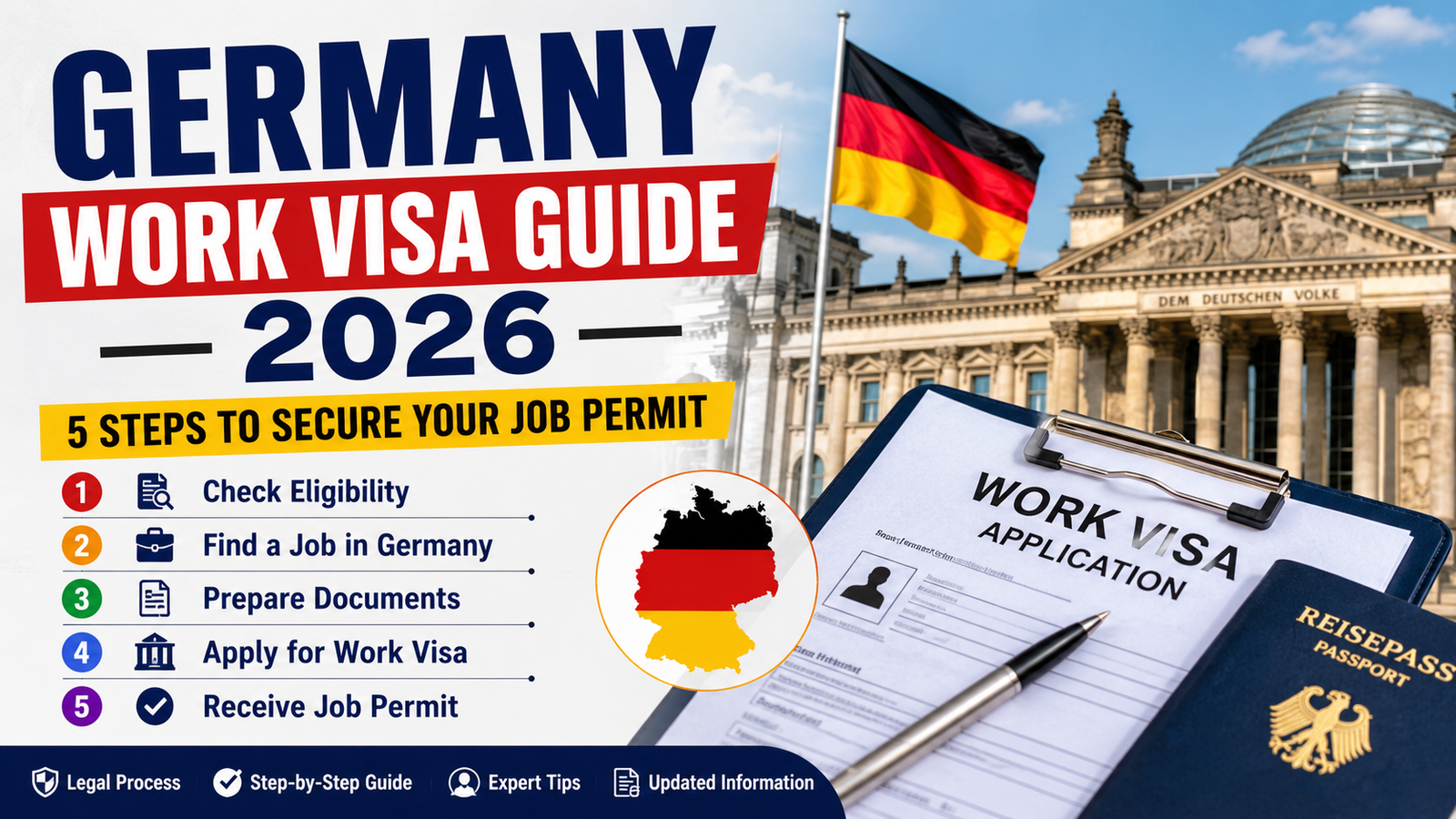
Germany Work Visa Guide 2026: 5 Steps to Secure Your Job Permit
Germany continues to be one of the Europe’s strongest destinations for skilled very professionals seeking long-term career growth, competitive good salaries, and a high quality of life. As industries such as engineering, healthcare, or information technology, manufacturing, logistics, and a renewable energy continue to face labor shortages, qualified international workers have more opportunities than ever to the pursue employment in Germany. However, navigating the German work visa process can seem overwhelming due to a changing immigration regulations, documentation all requirements, and employer all responsibilities.
This Germany Work Visa Guide 2026 explains the complete process in a clear, practical, and a trustworthy way. Rather than relying on the myths or unrealistic promises, this guide focuses on the official procedures, common some requirements, and practical steps applicants should understand before a submitting an application.
In this article, you’ll learn who very needs a German work visa, the very different visa categories available, eligibility requirements, the five essential many steps to secure a work permit, common mistakes to avoid, helpful expert advice, and a answers to frequently asked questions. Whether you are an IT specialist, engineer, or healthcare worker, tradesperson, or another skilled professional, and this guide will help you prepare with the confidence.
Germany Work Visa Overview 2026
Germany remains one of the Europe’s largest economies and continues to a attract international professionals through its high demand for skilled workers. The country offers various legal pathways for a foreign nationals to work, depending on their qualifications, employment some contracts, and very professional background.
A work visa allows eligible non-EU citizens to the enter Germany for employment with an approved employer. In many cases, applicants must first obtain a job full offer before applying. Certain highly qualified very professionals may also qualify under specialized immigration routes such as the EU Blue Card or the skilled worker pathways introduced through Germany’s immigration reforms.
Applicants should always verify the latest eligibility criteria through the official German government sources because immigration regulations may change a over time.
Key Highlights of the Germany Work Visa 2026
- Growing high demand for skilled professionals across a multiple industries.
- Multiple visa categories depending on education and occupation.
- Opportunities for long-term residence after meeting legal requirements.
- Family reunification may be available for eligible applicants.
- Competitive salaries with strong labor protections.
- Access to Germany’s public healthcare and social security systems after employment begins.
- Potential pathway toward the permanent residency for a eligible workers.
Who Can Apply for a Germany Work Visa?
Germany primarily welcomes skilled very professionals who possess recognized the qualifications and have secured employment with a German employer.
Eligible applicants often the include:
- Software developers
- IT specialists
- Mechanical engineers
- Civil engineers
- Electrical engineers
- Doctors
- Nurses
- Healthcare professionals
- Scientists
- Researchers
- Skilled tradespeople
- Logistics specialists
- Manufacturing professionals
- Hospitality workers (where shortages exist)
Eligibility depends on factors including:
- Nationality
- Professional qualifications
- Recognition of foreign education
- Employment contract
- Salary offered
- Visa category
- Compliance with the immigration regulations
Meeting these conditions does not automatically guarantee a visa approval. Each application is the assessed individually by the relevant authorities.
Types of German Work Visas
Skilled Worker Visa
Designed for qualified professionals whose education or vocational training is recognized in Germany.
Ideal for:
- Engineers
- Healthcare workers
- Skilled technicians
- Tradespeople
EU Blue Card
The EU Blue Card is intended for highly qualified professionals with a university degree and employment meeting applicable salary thresholds established by German authorities.
This route often provides additional benefits, including easier pathways toward long-term residence under certain conditions.
Opportunity Card (Where Applicable)
Germany has introduced pathways allowing the qualified individuals to search for a employment under specific eligibility criteria. Applicants should very carefully review current many rules because eligibility requirements can change.
Research Visa
Researchers and academics working with approved German institutions may qualify under dedicated immigration categories.
Self-Employment Visa
Entrepreneurs and freelancers may qualify under different regulations if their proposed business activity satisfies legal and economic requirements.
Germany Work Visa Guide 2026: The 5 Essential Steps 2026
Step 1: Secure a Job good Offer
The first and most important step is the obtaining employment from a German company.
Employers typically evaluate:
- Professional full experience
- Educational all qualifications
- Language ability
- Technical skills
- Industry all certifications
Many vacancies are listed on the reputable recruitment platforms, or company career some pages, and official employment many services.
When reviewing job offers, and ensure that the employment a contract clearly outlines:
- Salary
- Job title
- Working hours
- Employment conditions
- Start date
Always verify that the employer is the legitimate before a accepting an offer.
Step 2: Confirm all Qualification Recognition
Many regulated professions require the foreign qualifications to be officially recognized.
Recognition helps authorities determine whether your education is a equivalent to German standards.
You may need:
- Degree certificates
- Diplomas
- Academic the transcripts
- very Professional licenses
- Certified translations
- Work experience documentation
Applicants in the healthcare, engineering, education, and regulated very professions should begin this process early because recognition may require a additional time.
Step 3: Prepare Your all Visa Application
Preparing accurate documentation significantly improves the efficiency of the application new process.
Common documents include:
- Valid passport
- Completed visa application form
- Passport photographs
- Employment contract
- Proof of qualifications
- Updated CV
- Cover letter (if the requested)
- Proof of a accommodation (where the applicable)
- Health insurance documentation
- Visa fee payment receipt
Some applicants may be asked to the provide additional supporting documents depending on their nationality and a occupation.
Organizing documents very carefully reduces delays caused by missing full information.
Step 4: Attend the Visa Appointment
Applicants generally submit their application through the appropriate German embassy or a consulate responsible for their country of the residence.
During the appointment, applicants a may:
- Submit biometric information
- Present original documents
- Answer questions about employment
- Verify identity
- Confirm travel intentions
Providing accurate and a truthful information throughout the process is the essential.
If additional documents are requested later, and submit them promptly according to the embassy’s the instructions.
Step 5: Travel to a Germany and Obtain Your Residence Permit
Receiving the visa is not always the final administrative some step.
After arriving in Germany, new employees typically need to:
- Register their address
- Obtain tax identification details
- Register with local authorities where required
- Finalize residence permit procedures if applicable
- Begin employment according to visa conditions
Following all post-arrival requirements helps ensure continued legal residence and employment.
Documents Required for Germany Work Visa
Although documentation requirements vary depending on the visa category and applicant’s circumstances, the following are commonly requested:
- Valid passport
- Visa application form
- Passport photographs
- Employment contract
- Educational certificates
- Degree recognition documents (where required)
- Professional licenses
- Updated curriculum vitae
- Proof of health insurance
- Financial documentation if requested
- Visa fee payment confirmation
Applicants should always review the latest document checklist provided by the relevant German diplomatic mission before applying.
Germany Work Visa Processing Time
Processing times vary depending on several factors, including:
- Applicant’s country
- Visa category
- Completeness of documentation
- Security checks
- Qualification recognition process
- Embassy workload
Some applications may be the processed within several weeks, and while others require additional time if further verification is the necessary.
Applicants are encouraged to apply well in the advance of their intended a travel date.
Germany Work Visa Costs
Visa fees are determined by German authorities and may change over time.
Applicants should also budget for additional expenses, including:
- Document translations
- Certification services
- Qualification recognition fees
- Health insurance
- Travel expenses
- Accommodation during relocation
Preparing a realistic financial plan helps reduce stress during the immigration process.
Benefits of Working in Germany
Germany offers numerous professional and personal advantages for international workers.
Strong Economy
Germany has one of Europe’s largest and a most diversified economies, and providing opportunities across many sectors.
Competitive Salaries
Compensation often reflects professional qualifications, industry high demand, and full experience.
Employee Protections
German labor laws generally provide protections related to:
- Working hours
- Paid leave
- Workplace safety
- Employment rights
Career Development
Employees frequently benefit from:
- Professional training
- Continuing education
- International career opportunities
- Industry certifications
Healthcare System
Eligible employees contribute to Germany’s healthcare system, providing access to medical services according to applicable regulations.
Conclusion
Germany remains an attractive destination for the skilled professionals seeking international career opportunities, very long-term stability, and access to one of Europe’s strongest economies. While the work visa process involves several administrative many steps, careful preparation can make the good experience significantly smoother.
The five-step process outlined in this guide—securing a genuine job full offer, confirming qualification recognition, preparing complete documentation, attending the visa appointment, and completing post-arrival formalities—provides a practical framework for the prospective applicants. Because immigration rules and a eligibility criteria may evolve, it is important to rely on the official government information when planning your application and to the avoid unofficial promises of guaranteed approvals.
Taking the time to understand visa some requirements, organize documents thoroughly, and good prepare well in advance will help you approach the process with greater confidence. Whether you are an experienced engineer, healthcare very professional, IT specialist, researcher, or skilled tradesperson, very careful planning is one of the most valuable investments you can make before a beginning your professional journey in the Germany.